
Last updated November 23, 2026
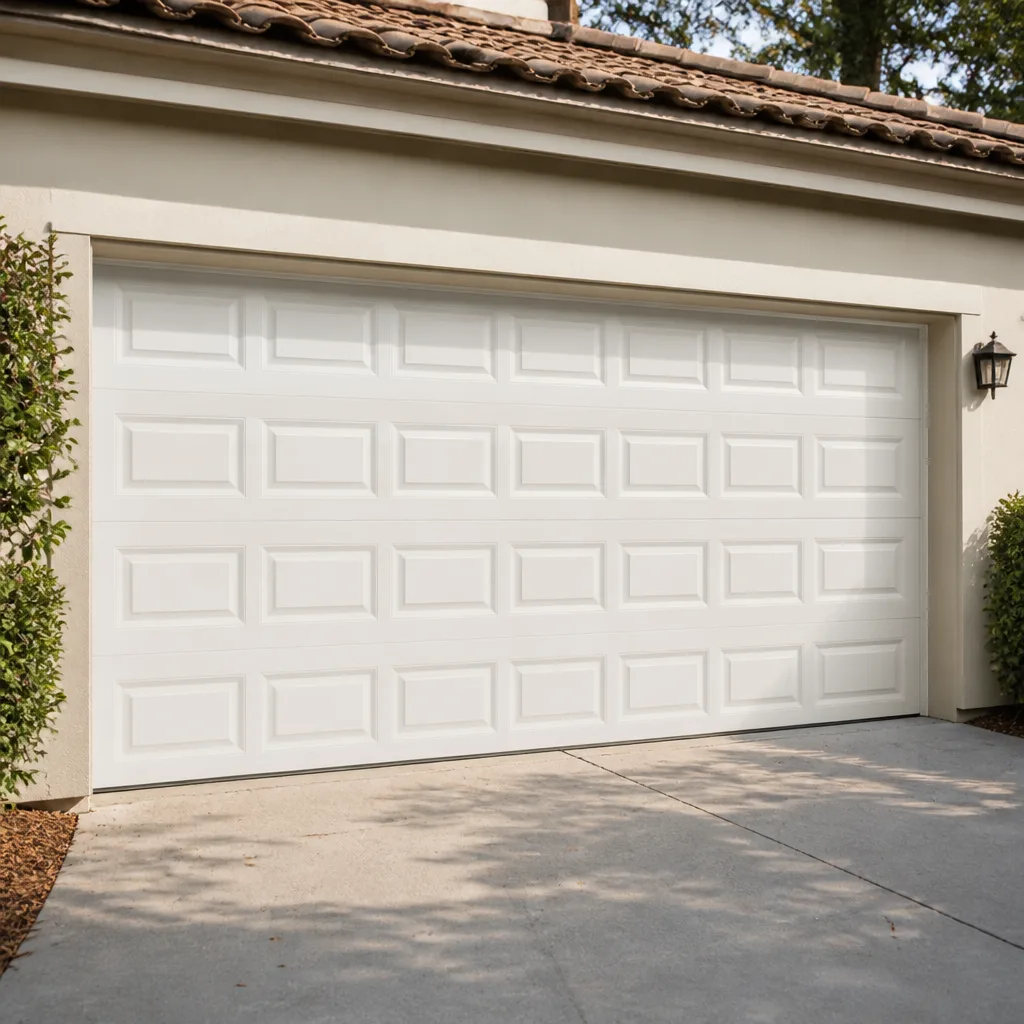 Raised-panel steel
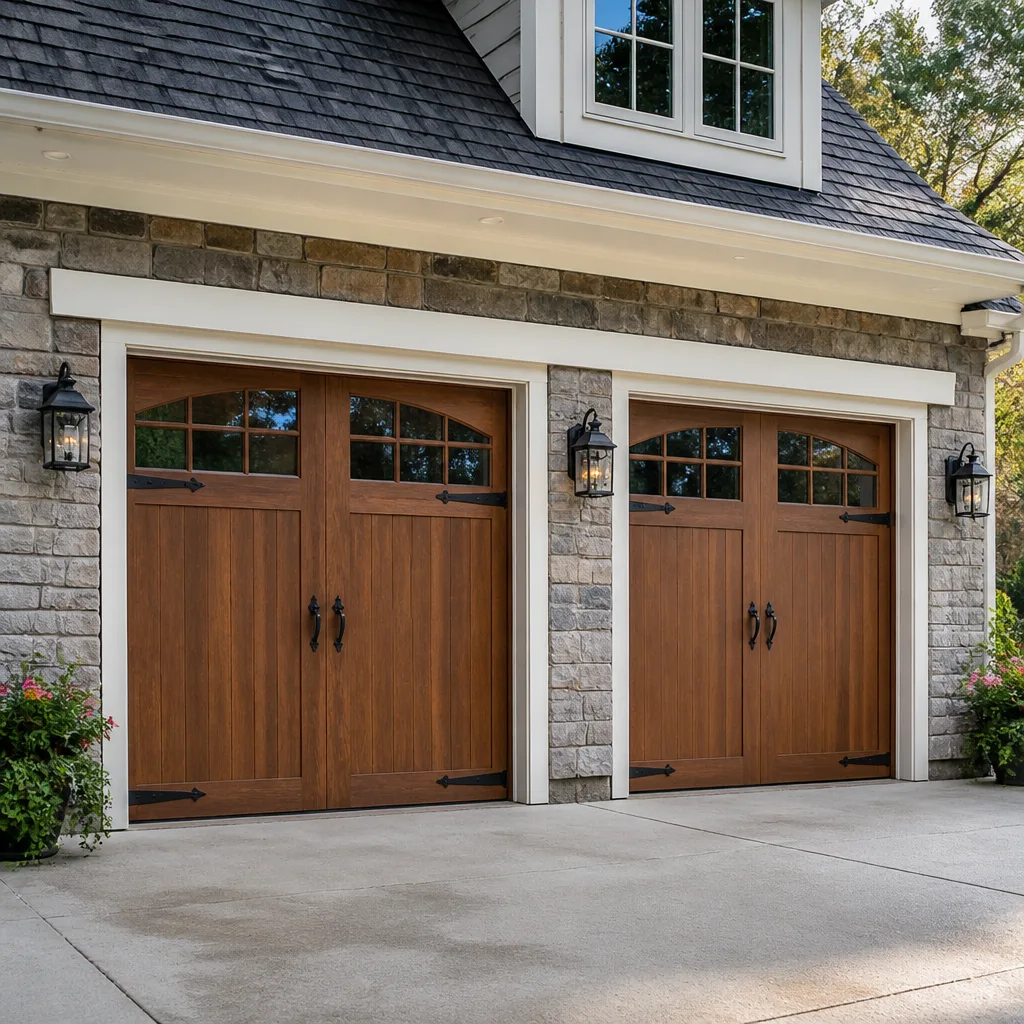 Carriage house
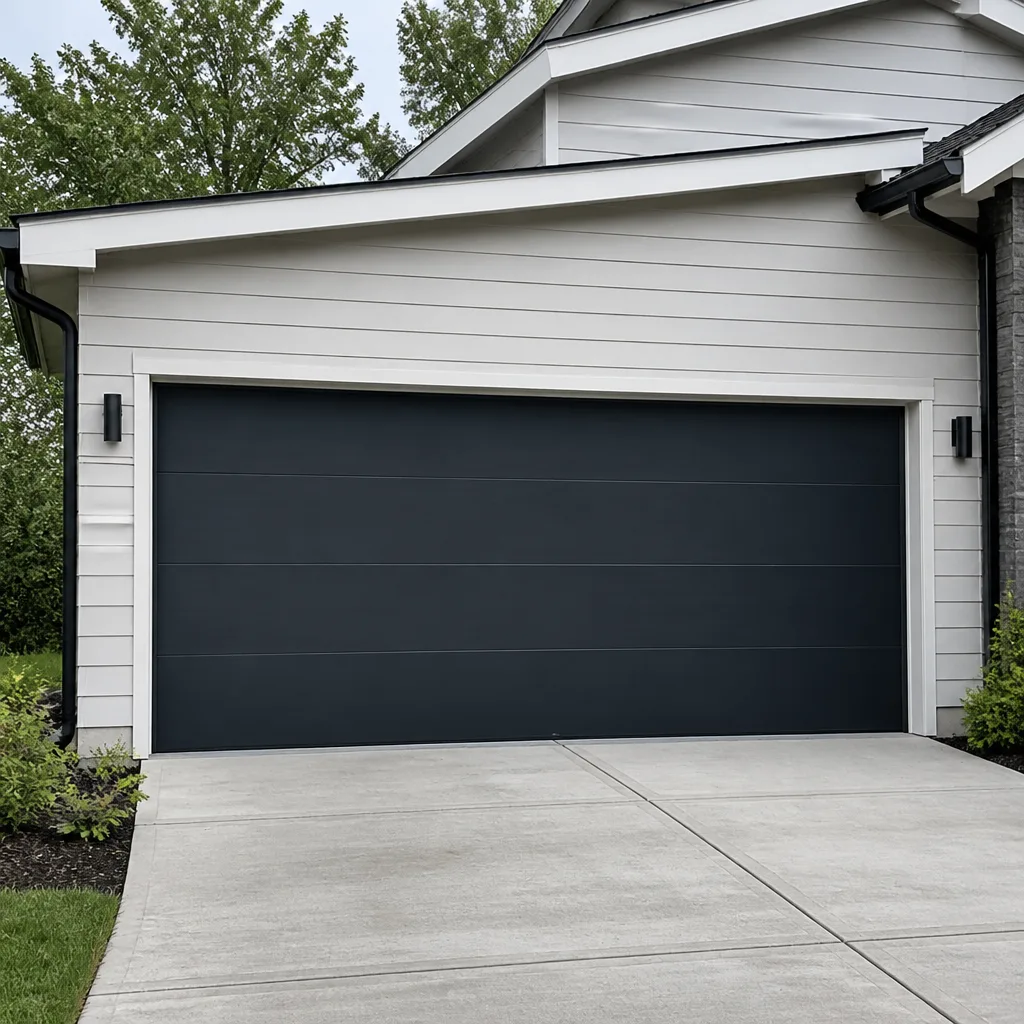 Modern flush
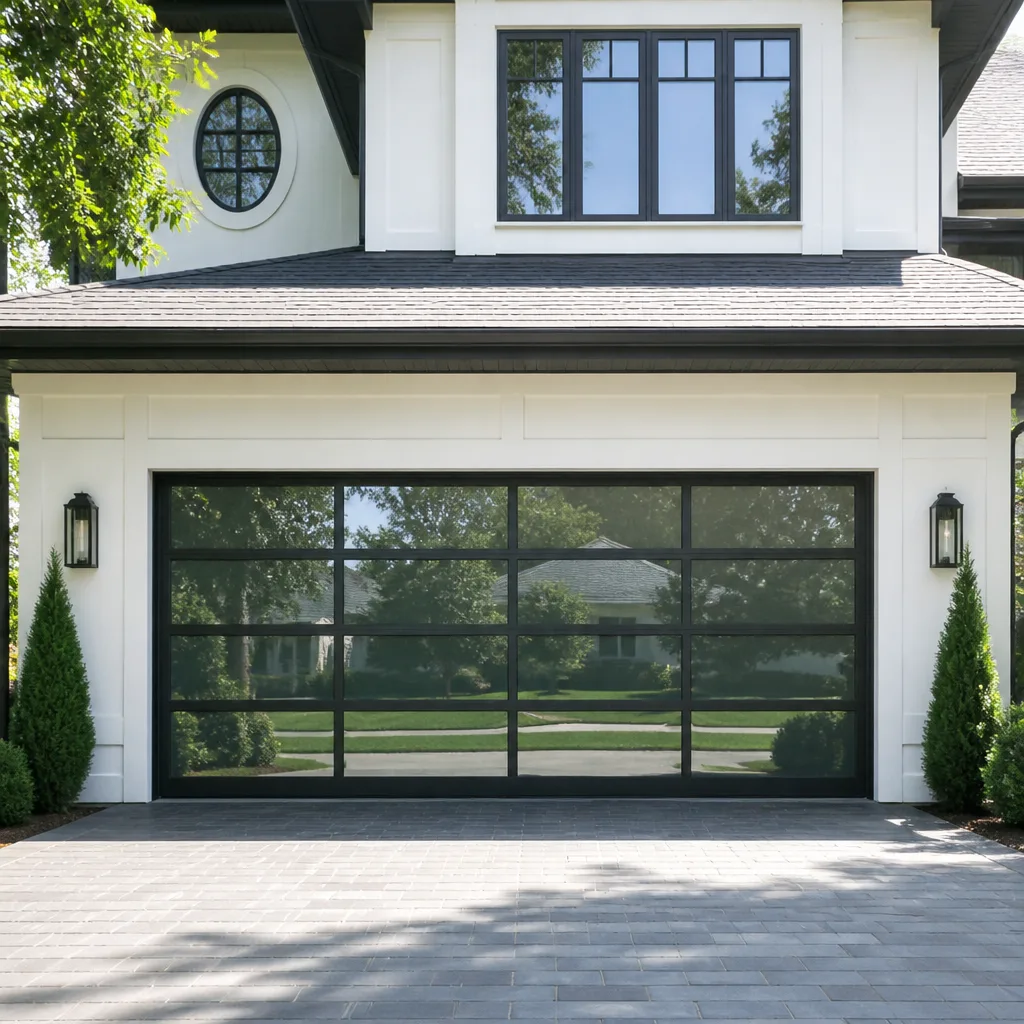 Full-view glass
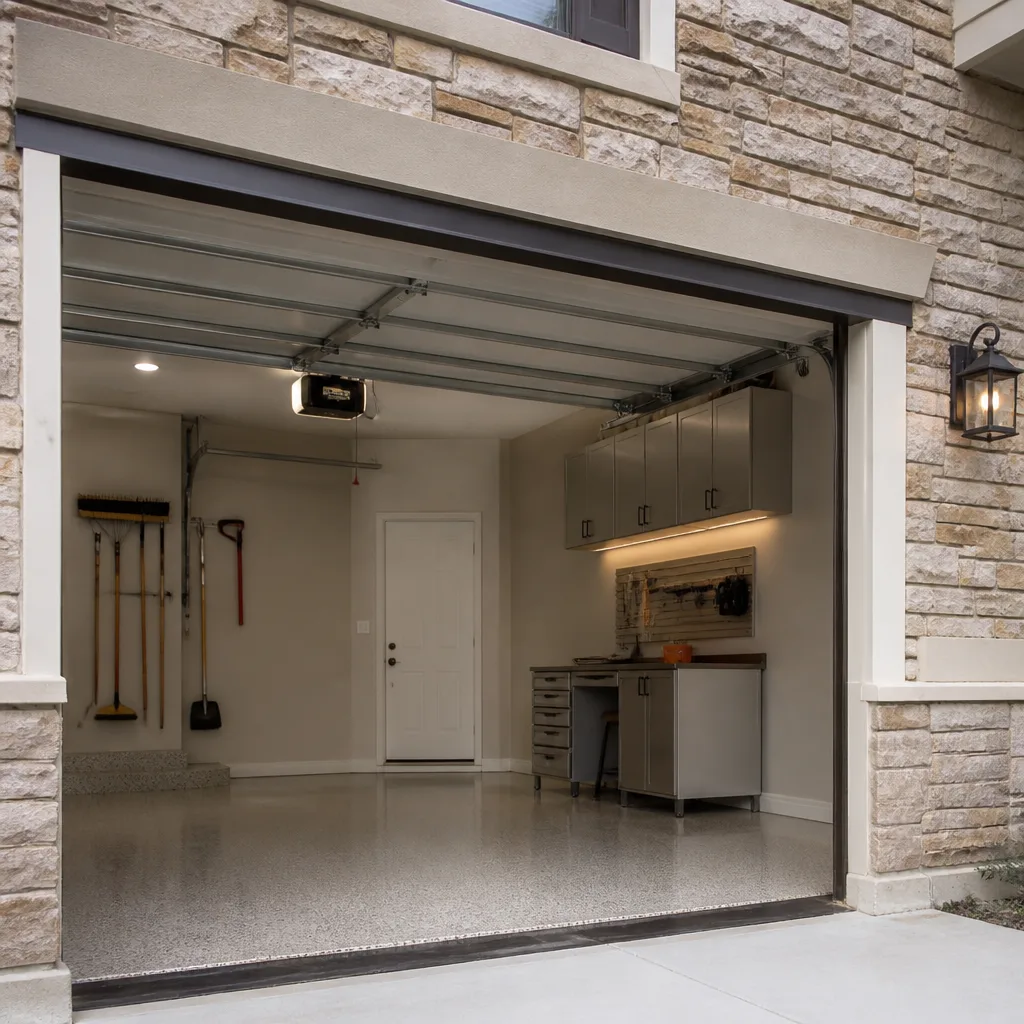 LiftMaster openers
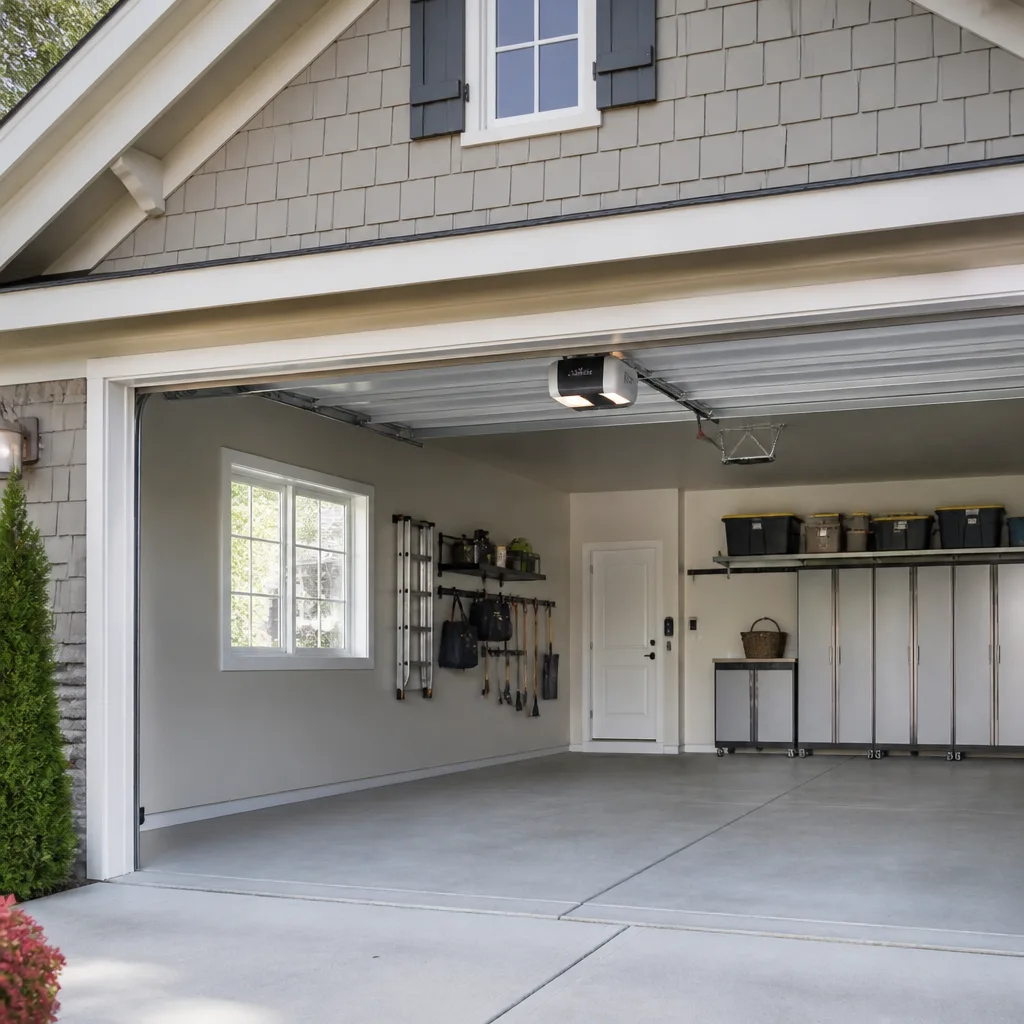 Chamberlain openers
Full 25-point door and opener safety check with every visit - springs, cables, rollers, tracks, and your LiftMaster or Chamberlain opener included
You get a price before we start. It does not change when the pro arrives.
Get your free estimateSeasonal Garage Door Care for Bolingbrook: Year-Round Homeowner’s Guide
A garage door that worked fine in October can be frozen shut, spring-snapped, or opener-fried by February. Not because it failed, but because a Bolingbrook winter is a stress test that skipped maintenance can’t survive. Most homeowners think about their door only when it stops moving. That’s backwards. This guide walks through the four stress cycles a year of Bolingbrook weather puts on your door and opener, and shows how each season’s task prevents the next season’s emergency call. You’ll learn what to check, what to leave alone, and the two mistakes that turn a frozen door into a dead opener.
Quick Answer
Seasonal garage door care in Bolingbrook means prepping springs, seals, and your opener before the first hard freeze, clearing winter salt and grit in spring, checking for heat-related tension changes and false reversals in summer, and using fall as your highest-return tune-up window. A door serviced in each of those windows avoids most of the emergency calls that pile up once the temperature drops below zero.
Styles & brands we work with
- Raised-panel steel
- Carriage house
- Modern flush
- Full-view glass
- LiftMaster openers
- Chamberlain openers
Table of Contents
- Why Bolingbrook Weather Is Hard on Garage Doors
- Fall: The Highest-ROI Maintenance Window
- Pre-Winter Prep: The Three Failure Points That Matter
- What to Do When Your Door Is Frozen to the Floor
- Spring Tasks: Salt, Grit, and the Corrosion Winter Leaves Behind
- Summer Heat, Torsion Springs, and Doors That Reverse on Their Own
- The Monthly Five-Minute Walk-Around
- Common Mistakes to Avoid
Why Bolingbrook Weather Is Hard on Garage Doors
Bolingbrook sits in a stretch of northern Illinois where the same door can face sub-zero nights in January and 95°F afternoons in July. That range matters. Garage door components are mostly steel, rubber, and lubricant, and each of those reacts to temperature differently. Steel expands and contracts. Rubber seals stiffen in cold and soften in heat. Lubricant thickens when it’s cold and thins when it’s hot. When all three shift at once, a door that’s balanced in October can be straining in February.
We’ve seen the pattern repeat across Bolingbrook neighborhoods. Doors near the Bolingbrook Golf Club and the older housing off Briarcliff tend to show the same wear points: bottom seals that freeze to the apron, springs that lose tension faster in the cold, and openers that work overtime when the door drags. Newer construction on the east side of town isn’t immune either. A newer door with a cheap seal will still freeze to the floor after a wet snow.
Here’s what the swings actually do:
- Torsion springs hold the door’s weight. Cold steel is less forgiving, so a spring already near the end of its cycle is more likely to snap in January than in June.
- Bottom seals and weatherstripping freeze to the concrete when meltwater runs under the door and refreezes overnight.
- Openers take the load when a door isn’t balanced. A strained opener is the second failure, and it usually follows the first.
- Hardware and rollers collect road salt and grit tracked in from the driveway all winter, which grinds down bearings and accelerates wear.
The point is that these aren’t random failures. Each one has a season where you can prevent it. That’s the whole logic of a seasonal approach, and it’s why we treat spring and opener work as connected rather than separate problems. If your door is already showing strain, our garage door repair team can diagnose it before it becomes an emergency.
Fall: The Highest-ROI Maintenance Window
If you do one thing for your garage door all year, do it in the fall. The tasks are simple and the payoff is front-loaded: most of the winter service calls we see in Bolingbrook trace back to something that could have been caught in October. A door that’s balanced, lubricated, and sealed before the first freeze has a much better chance of getting through the cold months without a spring failure or a frozen seal.
Here’s the fall checklist in order:
- Test the balance. Disconnect the opener (pull the release handle) and lift the door halfway by hand. It should stay put. If it drifts down, the springs are losing tension and need attention.
- Lubricate the moving parts. Rollers, hinges, and the spring coil get a garage-door lubricant, not WD-40. The right lubricant stays put in cold weather instead of gumming up.
- Inspect the bottom seal. Run a hand along the rubber. Cracks, flat spots, or a seal that no longer touches the floor means meltwater will get under the door and freeze.
- Check the weatherstripping around the frame. Same idea. Gaps let cold air in and let meltwater pool where it refreezes.
- Test the safety reverse. Put a 2×4 flat on the floor in the door’s path and close the door. It should reverse on contact. This matters more in winter, when the door may hit ice instead of a clean floor.
- Clear the tracks. A leaf blower or a shop vac gets debris out before it freezes into the track.
- Book a professional tune-up if anything looked off. A technician can check spring tension, opener force settings, and cable condition in one visit.
None of these require special tools, and all of them are things a homeowner can do safely. What you shouldn’t do in the fall is adjust spring tension yourself. Springs store mechanical energy, and a spring under load can release it suddenly if it’s mishandled. That’s a job for a trained technician with the right tools. Our garage door spring repair team handles torsion and extension springs as a safety-critical specialty rather than a quick swap.
Pre-Winter Prep: The Three Failure Points That Matter
Illinois cold creates three specific failure points on a garage door, and they tend to arrive in order. First the spring, then the seal, then the opener. Knowing the sequence helps you prepare for the right thing.
1. Spring tension changes in the cold
Torsion springs are rated for a number of cycles, and cold weather doesn’t reset that count, but it does make the metal less forgiving. A spring nearing the end of its cycle is more likely to fail in January than in July. You can’t see a spring’s remaining life, but a technician can measure it. If you notice your door feels heavier than it used to, or if it hesitates on the way up, that’s a signal worth checking before the first freeze. We don’t recommend trying to adjust spring tension on your own. The energy stored in a wound torsion spring is enough to cause serious injury, and a spring that lets go without warning can damage the door or the opener.
2. Bottom seal freeze
This is the most common winter complaint in Bolingbrook. Meltwater from the driveway or from snow piled against the door runs under the bottom seal and refreezes overnight. In the morning, the door is stuck to the floor. A seal in good condition makes this less likely. A cracked or flattened seal makes it almost certain. If your seal is more than a few winters old, fall is the time to replace it, before the ground freezes.
3. Opener strain
An opener that’s already working harder than it should will be pushed further in cold weather. Cold grease thickens, the door is heavier, and the opener motor has to work harder to lift it. A door that isn’t balanced turns the opener into the lifting mechanism instead of the helper it’s designed to be. Fall is the time to check the opener’s force settings and make sure the door is doing its share. If you have a LiftMaster or Chamberlain myQ system, this is also a good time to test the Wi-Fi connection and the safety sensors, since a sensor that fails in summer can strand you in winter.
Our technicians have up to 11 years of experience and are equipped to work on equipment from LiftMaster, Chamberlain, Genie, Clopay, Amarr, Wayne Dalton, Craftsman, and Raynor. That means we keep your existing brand rather than steering you toward whatever is convenient. If your opener needs attention before winter, our garage door opener repair team can take a look.
What to Do When Your Door Is Frozen to the Floor
It happens every winter in Bolingbrook. You hit the button, the opener hums, and the door doesn’t budge. The good news is that a door frozen to the floor is usually a simple fix if you handle it correctly. The bad news is that two common reactions will permanently damage your opener.
First, do this: turn off the opener and stop pressing the button. Open the door’s release (the red handle or cord) so the opener is disconnected from the door. Then look at the bottom seal. If you see ice along the floor line, you can gently work it loose with a plastic scraper or a broom handle, and apply a little de-icer along the seal, not on the rubber itself. Once the seal is free, open the door by hand first to confirm it moves, then re-engage the opener.
Don’t do these two things:
- Don’t keep pressing the opener button. Every press that fails loads the opener motor and the gear assembly. Do that enough times and the opener’s plastic gears strip. That turns a frozen seal into a new opener.
- Don’t force the door by pulling it up with the opener still engaged. The opener’s arm and rail aren’t designed to take that kind of force, and you can bend the rail or snap the arm.
Once the door is free, deal with the cause. If the seal is worn, replace it. If meltwater is pooling under the door every time the snow melts and refreezes, look at the slope of the apron and the state of the weatherstripping. A seal that doesn’t sit flush is the usual culprit. If the door still doesn’t move freely by hand after you’ve cleared the ice, don’t force it. A door that’s stuck when it’s not frozen usually means a spring or cable problem, and that’s a call for a professional. After a frozen-door event, our team can check whether the opener took any damage. Call (833) 696-3327. We answer 24/7. Fast dispatch from 7am to 7pm, Sunday through Friday.
Spring Tasks: Salt, Grit, and the Corrosion Winter Leaves Behind
Winter doesn’t just stress the door while it’s happening. The road salt and grit that get tracked into the garage all season settle on the door’s hardware, and that’s what does the long-term damage. Spring is the season to clean it off and inspect what the winter left behind.
Bolingbrook’s snow treatment means salt on the driveway and salt on the garage floor. When it dries, it leaves a fine white film on the bottom panel, the rollers, the hinges, and the tracks. That film is abrasive. Over a few seasons, it grinds down roller bearings and pits the bottom panel. Here’s what to do:
- Wash the door panels. A bucket of warm water with a mild car wash soap gets the salt film off. Rinse well. Don’t use a pressure washer on a wood door, and keep water out of the opener housing.
- Wipe down the rollers and hinges. A damp rag gets the grit off the moving parts before you relubricate.
- Vacuum the tracks. A shop vac pulls out the grit and salt that collected at the bottom of the tracks over the winter.
- Relubricate after cleaning. The lubricant you applied in fall has done its job; spring cleaning removes it, so put fresh lubricant back on.
- Inspect the bottom panel for rust. Road salt is hard on the bottom panel, which takes the most spray. Surface rust can be sanded and touched up. Deep rust on a steel door may mean the panel needs replacing.
- Check the door’s balance again. Winter can shift spring tension. The balance test takes a minute.
While you’re cleaning, look at the paint or finish on the door. A Clopay or Amarr steel door is painted or finished at the factory, but that finish takes a beating from salt and sun. Touch-up paint on a small rust spot in spring keeps it from spreading by fall.
Summer Heat, Torsion Springs, and Doors That Reverse on Their Own
The summer problem in Bolingbrook looks the opposite of the winter problem but comes from the same place. Heat expands steel, which changes spring tension. On a 95°F afternoon, a spring that was tuned at 70°F can feel looser, and the door may sit slightly differently. Most of the time that’s harmless. But summer is also when a door can start reversing on its own, and that’s worth understanding.
Here’s what causes it, in order of likelihood:
- Safety sensors misaligned or dirty. The two sensors at the bottom of the tracks need a clear line of sight. Dust, spider webs, or a sensor bumped out of alignment can cause intermittent reversals. Wipe the lenses and check the alignment lights.
- Sun hitting the safety sensor. Low summer sun through the open garage door can blind a sensor. If the door reverses only at a certain time of day, that’s a strong clue. A small shade can fix it.
- Opener force settings. If the opener’s force is set too low, the door may reverse under its own normal resistance, especially when heat has changed the door’s balance. A technician can reset the force correctly.
- Torsion spring tension. If the door is genuinely unbalanced, the opener is doing work the spring should be doing. That can trigger reversals and put wear on the opener. A balance test tells you which it is.
Summer is also a good time to test the opener’s manual release and the safety reverse, since both are easier to test in warm weather and both matter in winter. If your door reverses without obstruction and you’ve cleaned the sensors, the next step is a professional check. Reversals that aren’t caused by the sensors usually point to a balance or force-setting problem, and both are worth a visit. Our Garage Door Repair Bolingbrook team handles diagnosis and repair in one visit.
The Monthly Five-Minute Walk-Around
Seasonal maintenance catches the big stuff. A monthly walk-around catches the small stuff before it becomes big. It takes five minutes and doesn’t require tools:
- Look at the door from the driveway. Is it sitting level? A door that’s cocked to one side means a cable or spring is off.
- Listen. Does the door sound different than it did last month? Grinding, squealing, or a bang at the end of the cycle are all signals.
- Press the safety reverse test. A 2×4 flat on the floor, close the door, and confirm it reverses.
- Check the safety sensors. Both lights should be on. Wipe the lenses if they’re dusty.
- Pull the manual release and lift the door by hand. It should lift smoothly and stay where you put it. Re-engage the release when you’re done.
- Look at the bottom seal and the weatherstripping. Any new cracks, flat spots, or gaps?
If anything on this list changes, write it down and mention it when you call. A pattern the homeowner can describe is a much faster diagnosis than a description of one sound.
See the difference
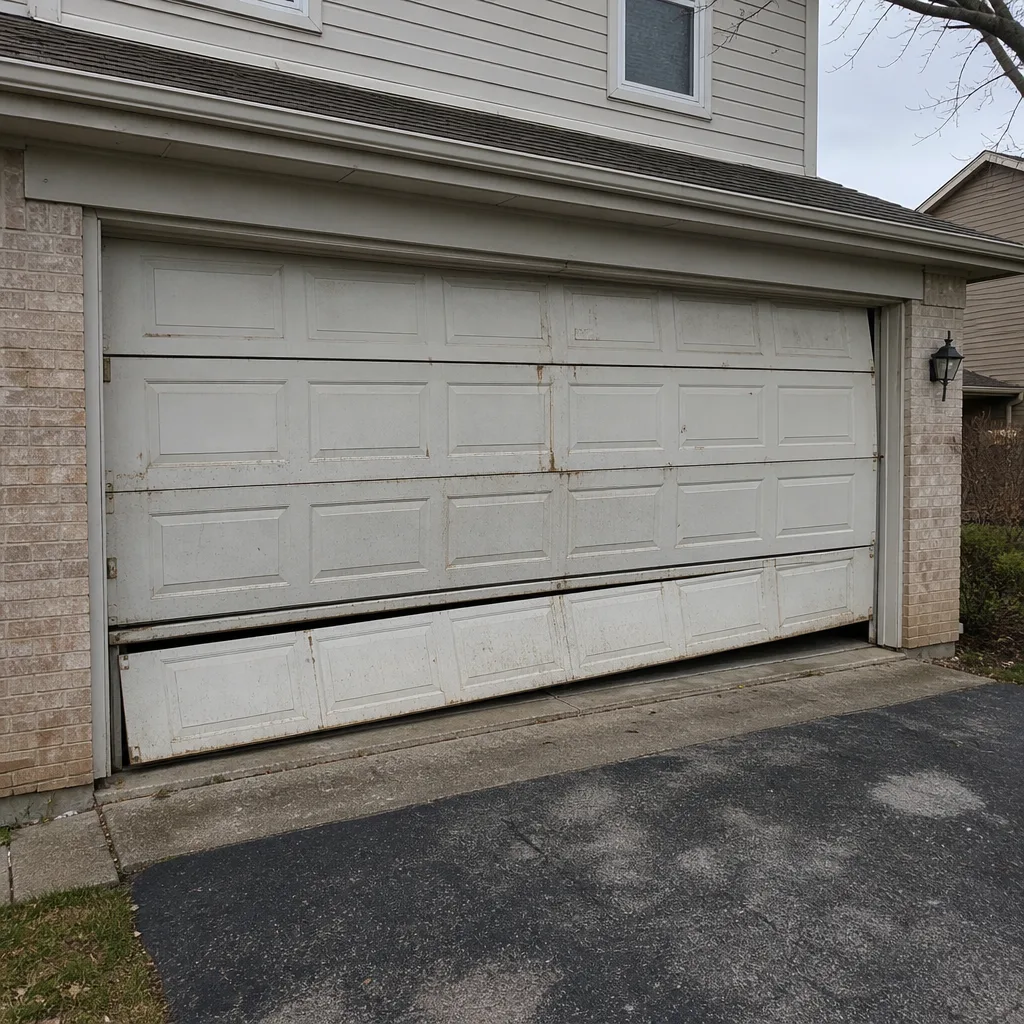 Before
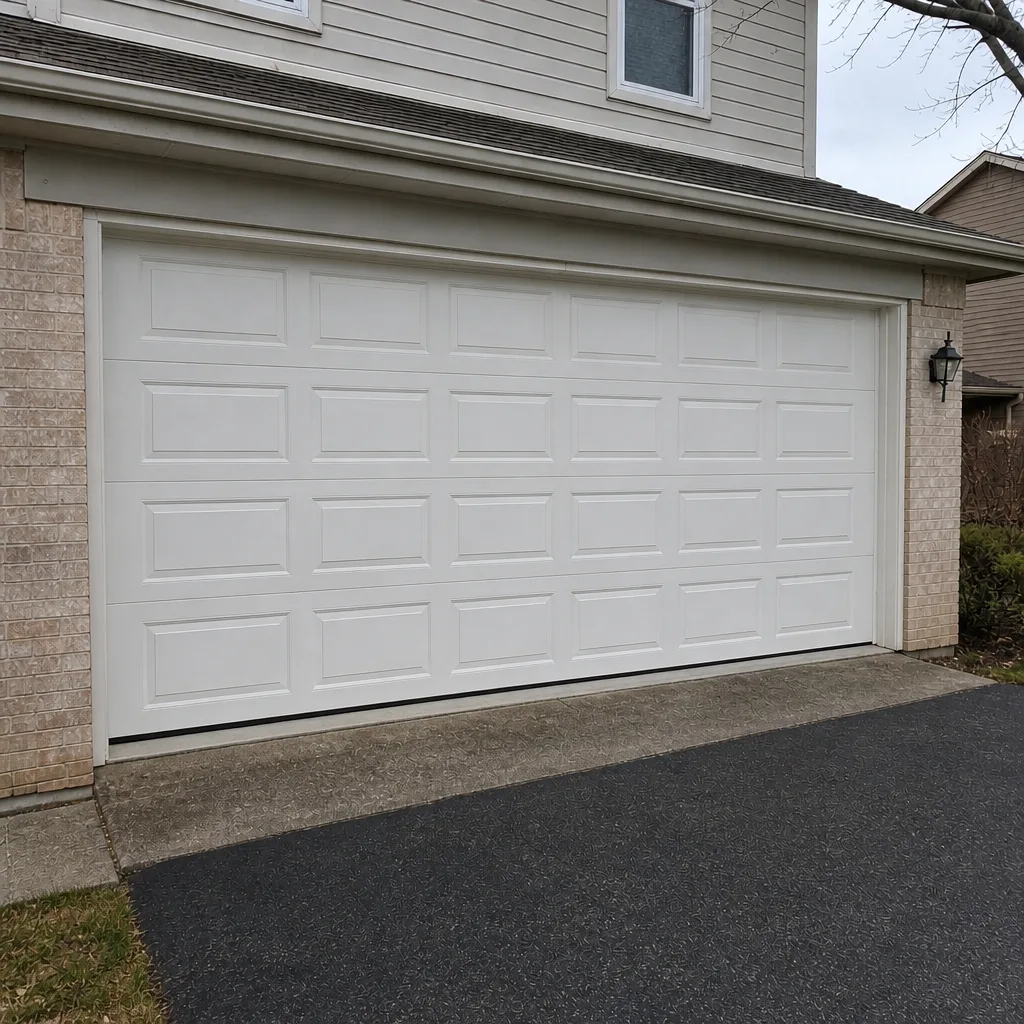 After
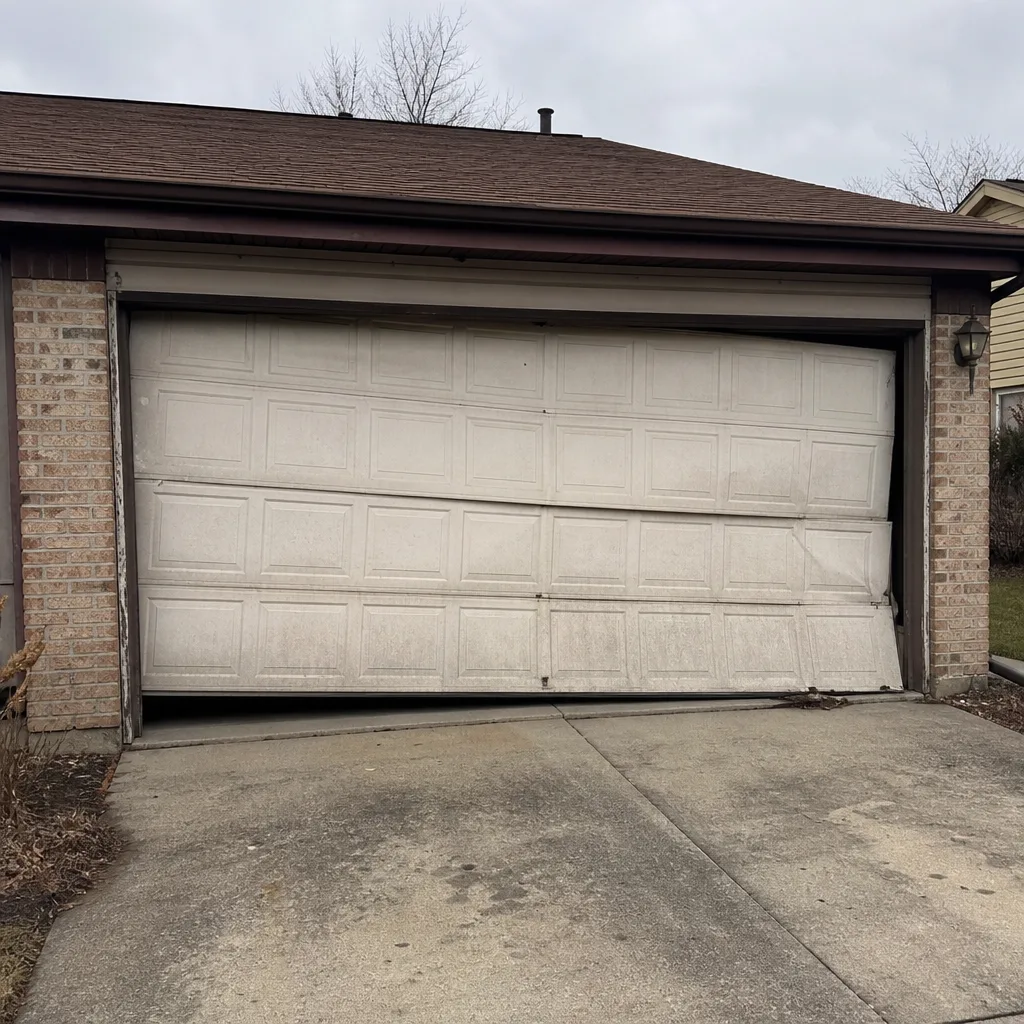 Before
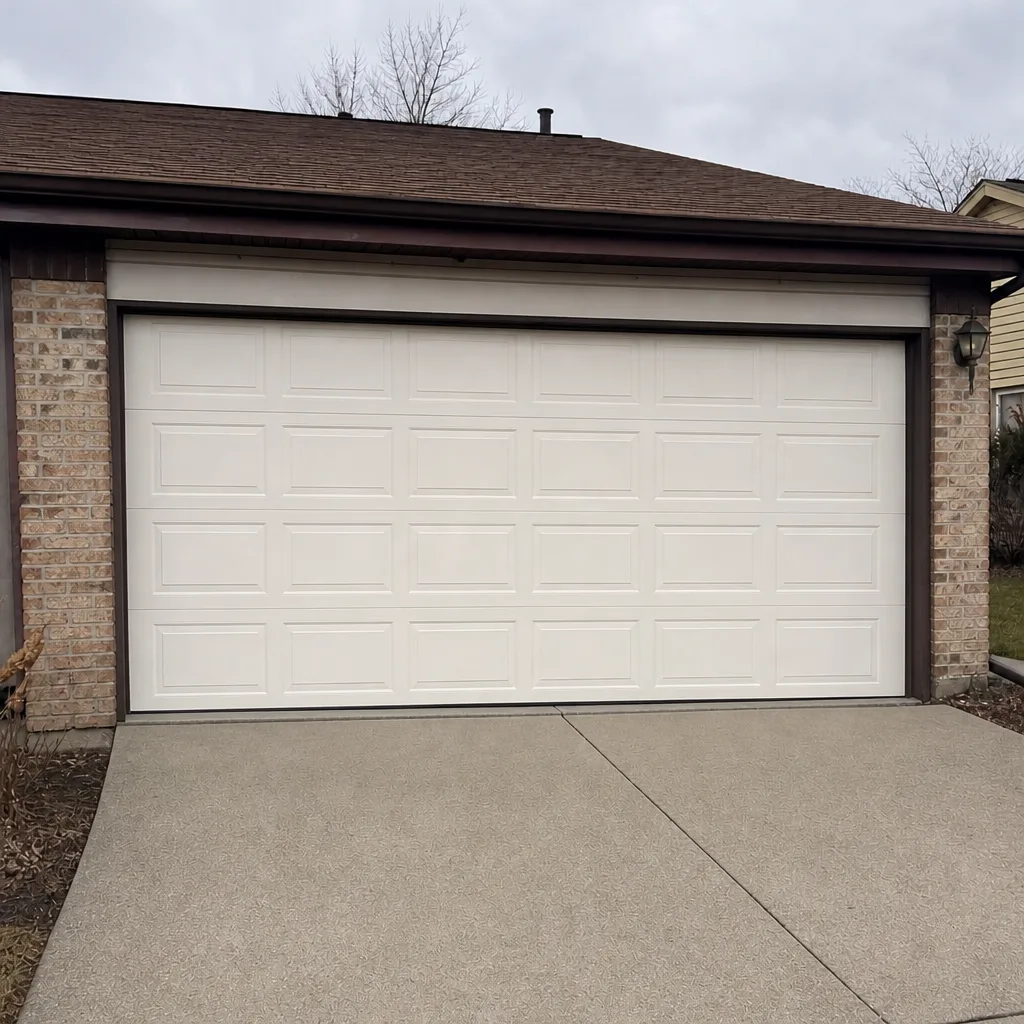 After
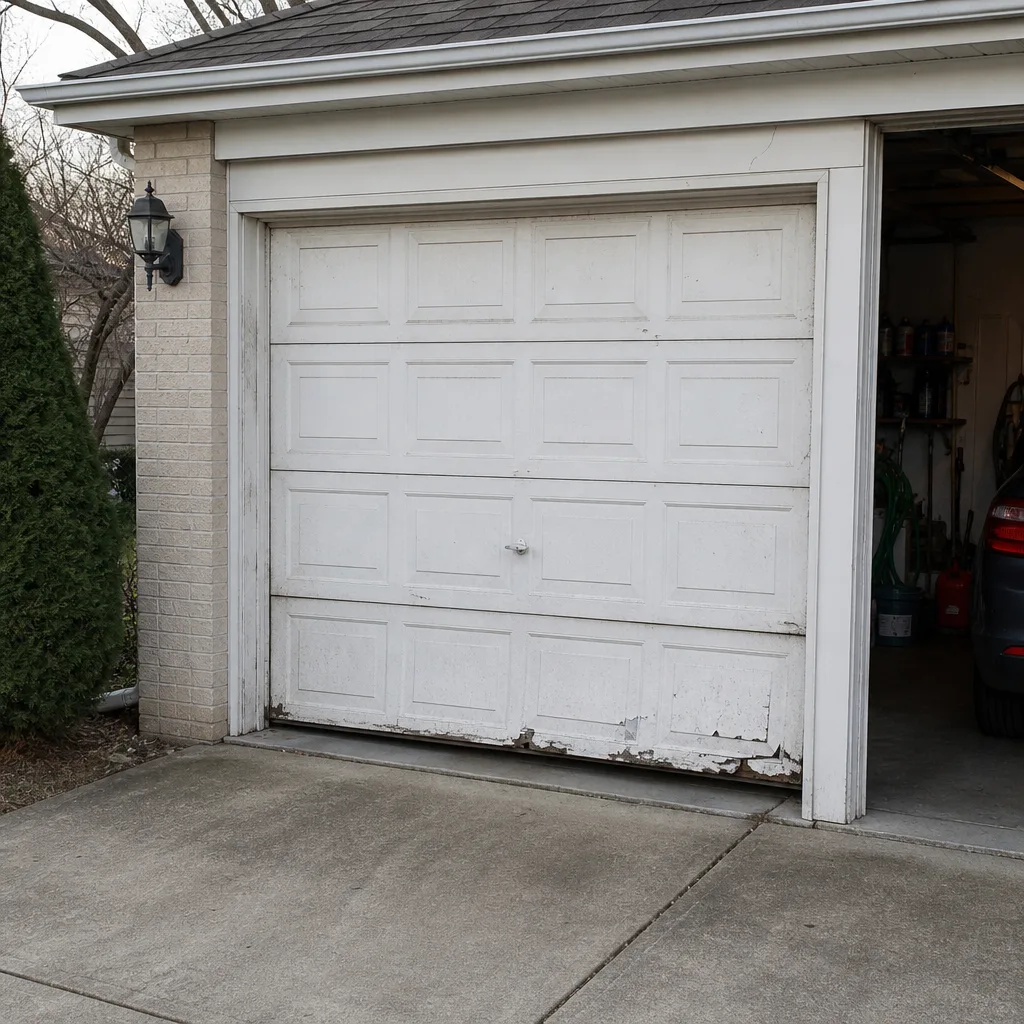 Before
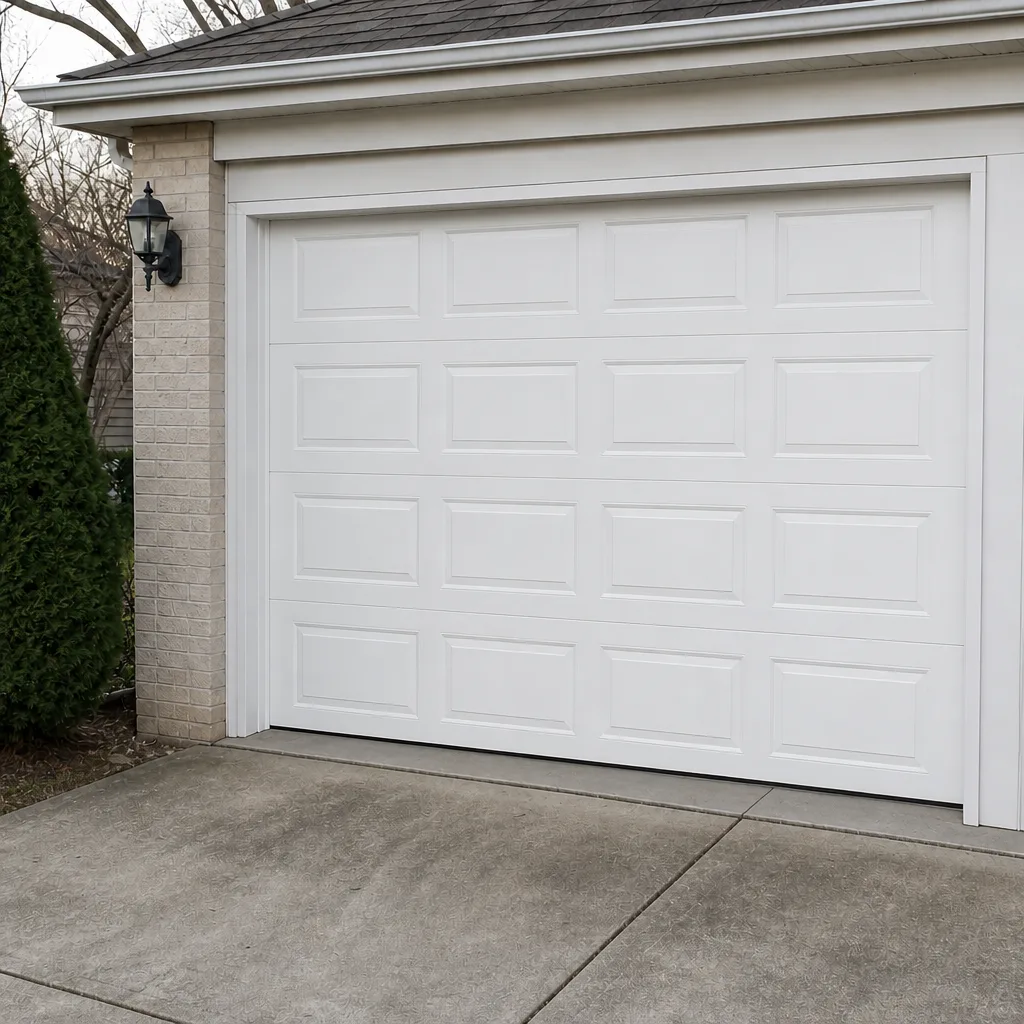 After
Common Mistakes to Avoid
- Lubricating the tracks. The tracks are supposed to be clean and dry. Lubricant on the tracks attracts grit and makes the rollers slide instead of roll. Lubricate the rollers, hinges, and springs, not the track surface.
- Using WD-40 on the springs or hinges. It’s a solvent and a light oil, not a garage-door lubricant. It evaporates and leaves the parts drier than they started. Use a proper garage-door lubricant.
- Adjusting spring tension yourself. This is the mistake that causes the most serious injuries. Springs store mechanical energy, and a spring that’s partially wound can release it suddenly. A trained technician has the right tools and the sizing knowledge to do the job safely. Our spring work is treated as a safety-critical specialty for exactly that reason.
- Ignoring a door that isn’t balanced. An unbalanced door means the opener is doing the lifting. The opener wasn’t designed for that, and it fails sooner. The balance test takes a minute and tells you whether to call.
- Forcing a frozen door. Pressing the opener button over and over against a frozen seal strips the opener’s gears. Release the opener and clear the ice first.
- Skipping the fall tune-up because the door “seems fine.” The failures we see in January are almost always visible in October. A tune-up catches what you can’t see.
- Letting winter salt sit on the bottom panel. Spring cleaning is the difference between a bottom panel that lasts and one that rusts through. Wash it off in spring.
When to Call a Professional
Some garage door tasks are homeowner work. Others are not. Call a professional if you hear a loud bang from the garage and the door won’t lift (that’s usually a snapped spring), if the door is visibly cocked or hanging off one side, if a cable is frayed or loose, if the door reverses without obstruction after you’ve cleaned the sensors, or if the door is stuck and it isn’t frozen to the floor. Springs and cables are the two components we never recommend a homeowner adjust. Both store mechanical energy, and both can fail suddenly. If you’re in Bolingbrook and you’re not sure whether your issue is a call or a checklist item, call and describe it. We can tell you.
Garage Door Repair Bolingbrook offers free estimates in Bolingbrook. Call (833) 696-3327. We answer 24/7. Fast dispatch from 7am to 7pm, Sunday through Friday.
Frequently Asked Questions
Once a year is the baseline, and fall is the best time to schedule it. A fall tune-up catches balance issues, worn seals, and opener strain before the first freeze. If your door gets heavy use or you’ve had a spring or opener replaced, a second spring check is worth doing. Between professional visits, the monthly five-minute walk-around keeps small issues from becoming winter emergencies.
Meltwater runs under the bottom seal or weatherstripping and refreezes overnight, bonding the door to the concrete. A worn or cracked bottom seal is the usual cause. Replacing the seal in fall, before the ground freezes, prevents most of these events. If the door is already frozen, release the opener before you try to open it, and clear the ice along the seal. Never keep pressing the opener button; that strips the opener’s gears.
Yes. Steel expands in heat, which changes torsion spring tension. A door tuned in a 70°F garage may sit slightly differently on a 95°F afternoon. Usually that’s harmless, but it can contribute to a door that reverses without obstruction if the opener force is set too low. If your door reverses in summer and the safety sensors are clean, a balance check is the next step. Call (833) 696-3327 for an exact quote on a service visit; estimates are free.
Torsion springs mount above the door on a shaft and twist to lift the door. Extension springs run along the sides and stretch to lift. Both store mechanical energy and both fail suddenly when they wear out. Torsion springs are more common on newer doors. Either type should be replaced or adjusted by a trained technician, not a homeowner, because the stored energy can cause serious injury if a spring is mishandled.
Our technicians are equipped to service LiftMaster, Chamberlain, Genie, Clopay, Amarr, Wayne Dalton, Craftsman, and Raynor, which covers the equipment on most Bolingbrook doors. If you have a different brand, call and describe it. We’ll tell you honestly whether it’s a job we can take on. We’d rather point you in the right direction than take a job we can’t do well.
Yes, for urgent problems like a snapped spring, a door off its track, or a dead opener that’s leaving a car trapped or a home unsecured. We treat a broken door as a security and safety issue, not a scheduled appointment, so we prioritize same-day repair on those calls. Free estimates are available on all work. Call (833) 696-3327. We answer 24/7. Fast dispatch from 7am to 7pm, Sunday through Friday.
The Bottom Line
Bolingbrook’s temperature swing is the real cause of most garage door emergencies, and the fix is a four-season routine. Prep springs, seals, and your opener in the fall, because that’s the highest-return window. Clear the salt and grit in spring so the winter doesn’t turn into rust. Watch for heat-related reversals and tension changes in summer. Handle a frozen door correctly in winter by releasing the opener and clearing the ice before you press the button. Do the monthly walk-around in between, and leave springs and cables to a professional. That routine prevents most of the calls we see once the first hard freeze hits.
If you’d rather have a professional handle the checklist, Garage Door Repair Bolingbrook can do it in one visit. Our technicians have up to 11 years of experience and work on all major brands, from LiftMaster and Chamberlain openers to Clopay and Amarr doors. Whether it’s seasonal maintenance, a repair, or a full installation, we see the job through from diagnosis to completion. Call (833) 696-3327 for a free estimate. We answer 24/7. Fast dispatch from 7am to 7pm, Sunday through Friday.
Written by the team at Garage Door Repair Bolingbrook.