
Last updated November 23, 2026
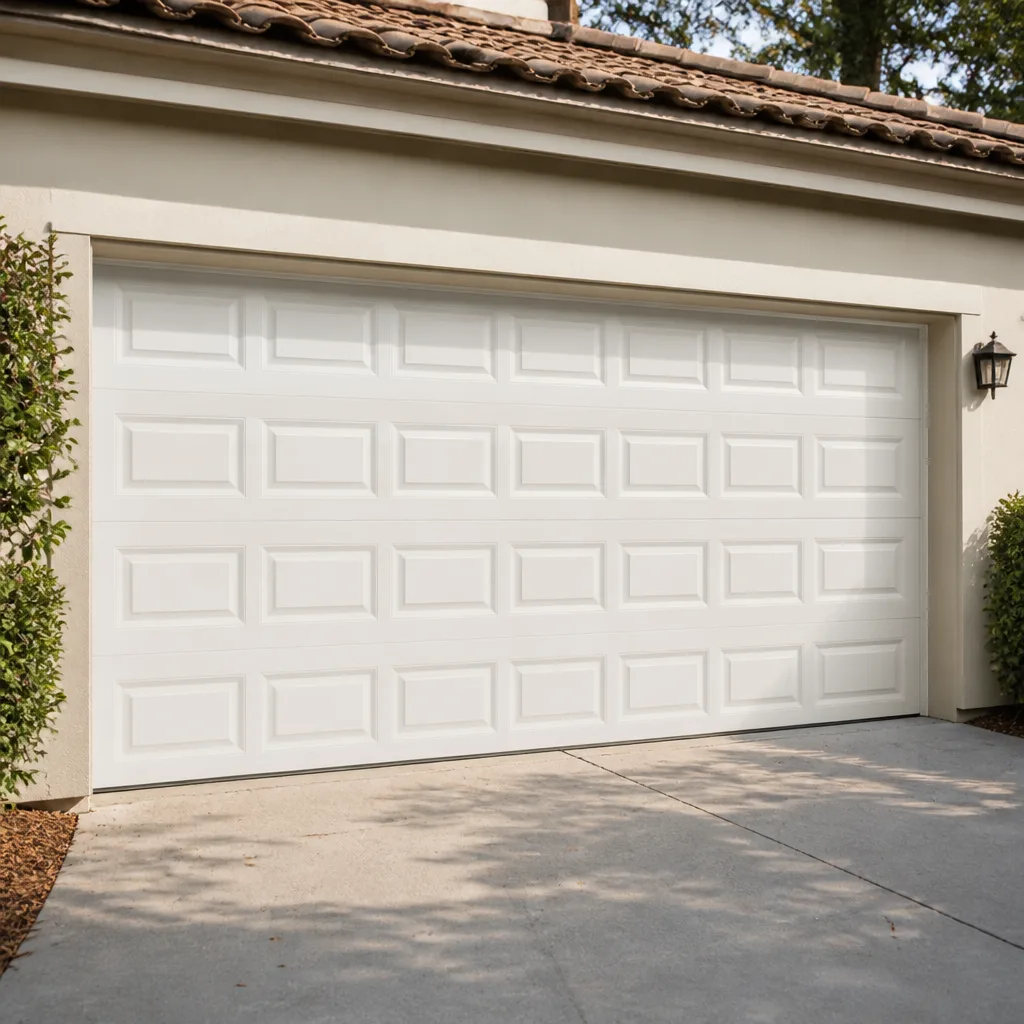 Raised-panel steel
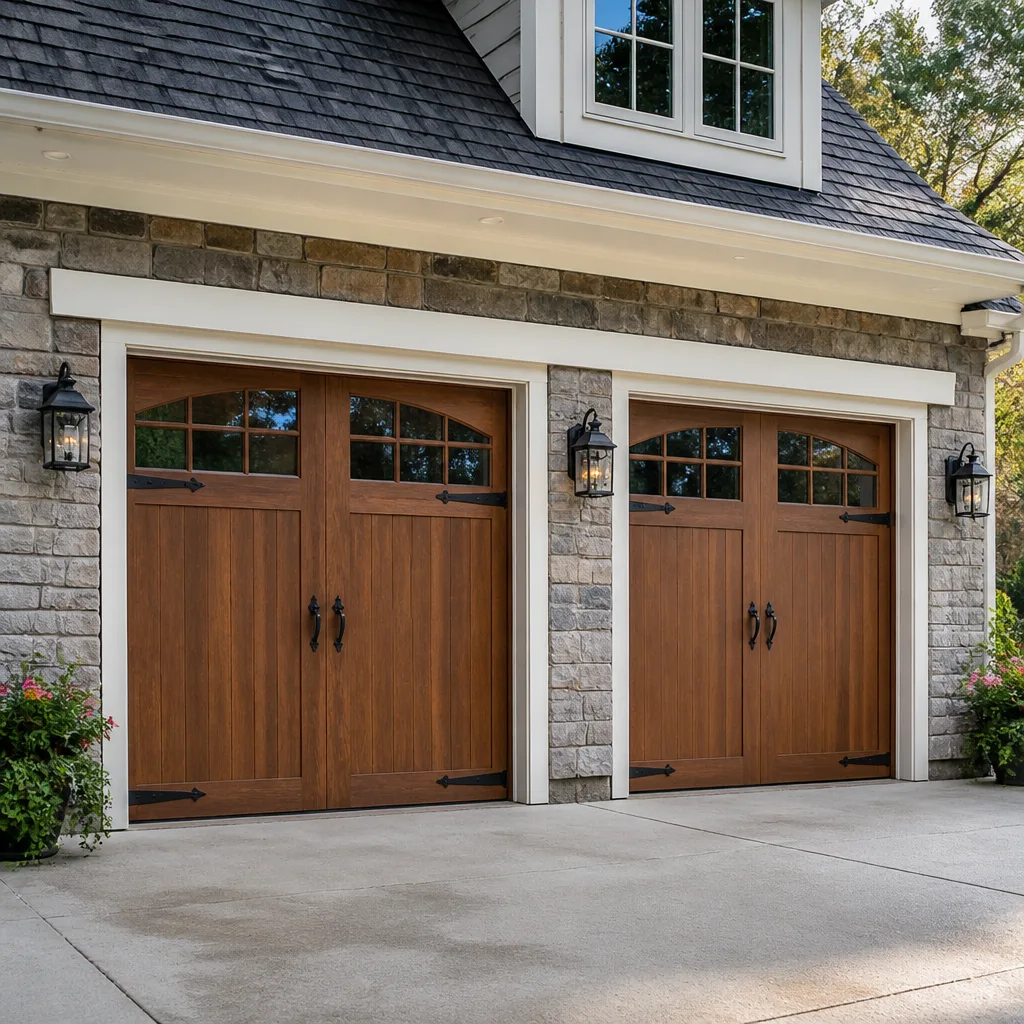 Carriage house
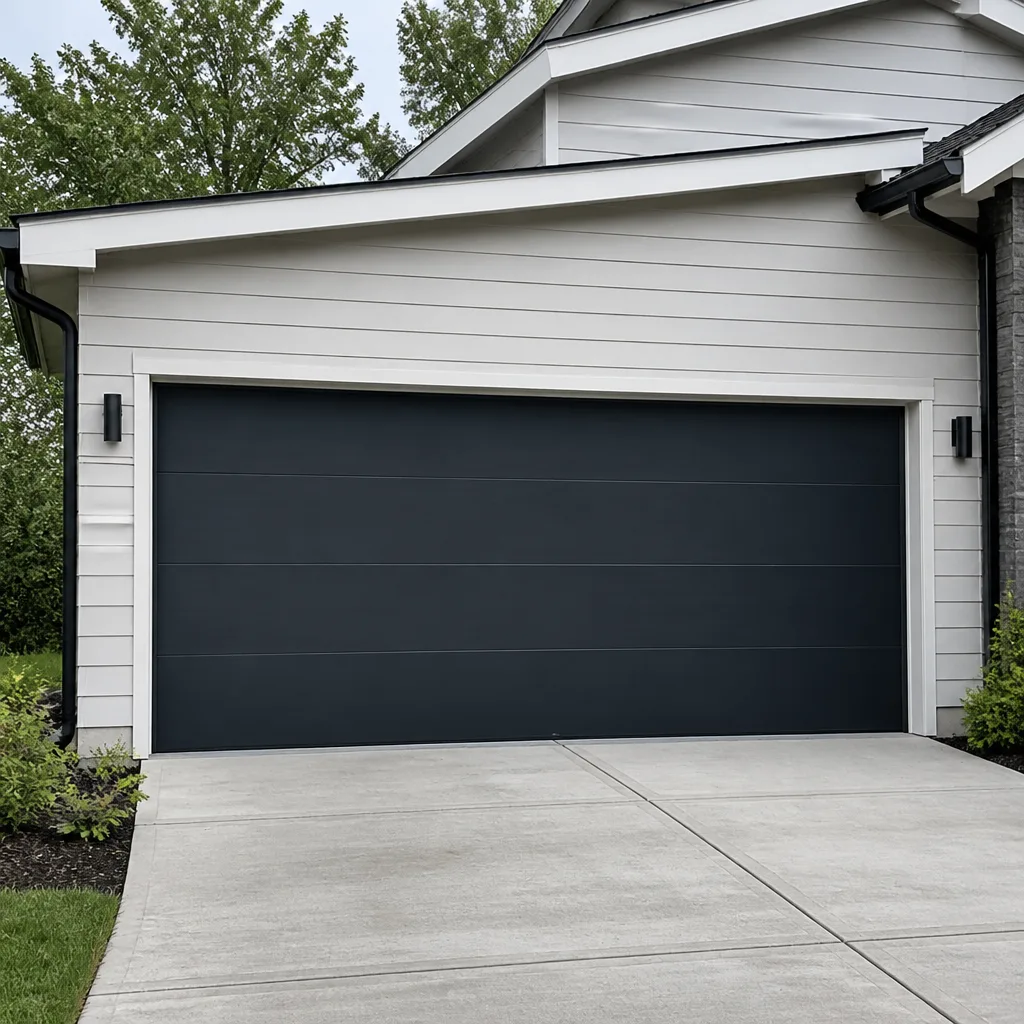 Modern flush
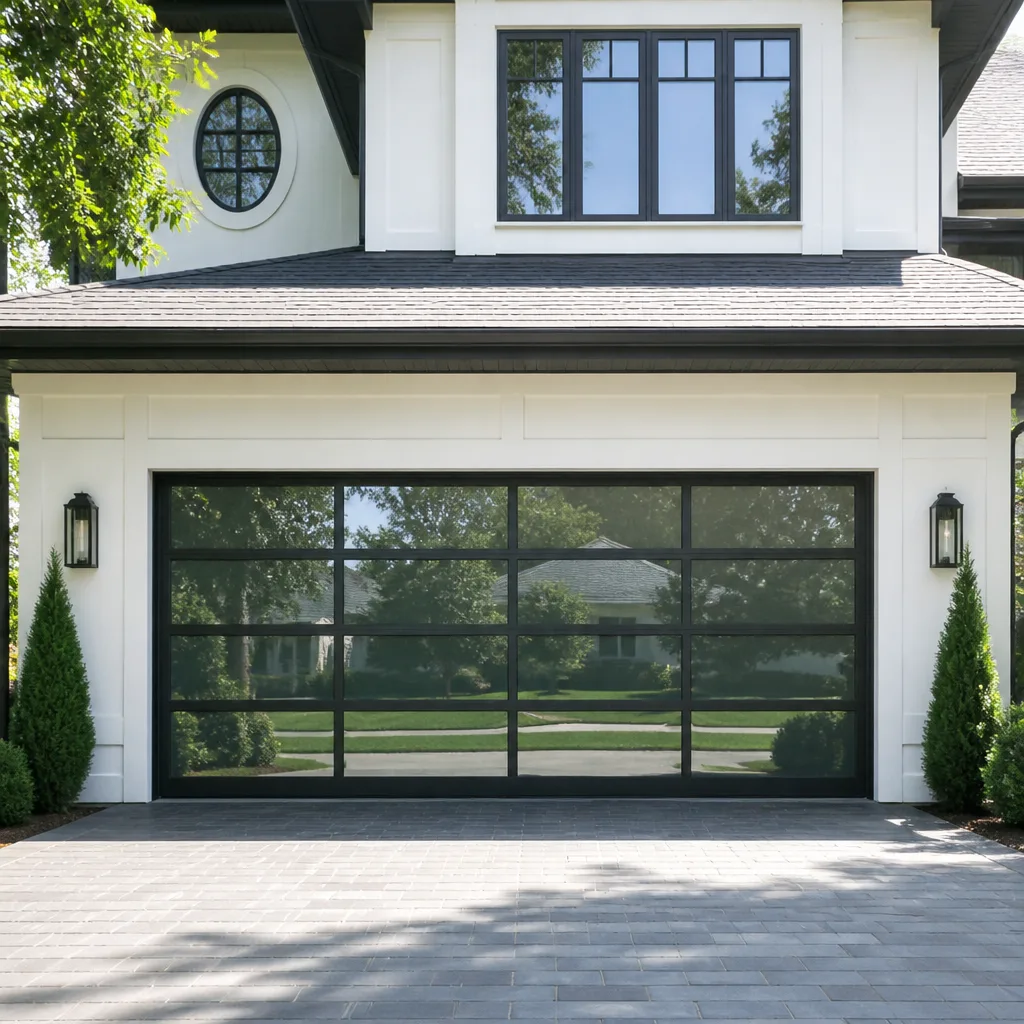 Full-view glass
 LiftMaster openers
 Chamberlain openers
Full 25-point door and opener safety check with every visit - springs, cables, rollers, tracks, and your LiftMaster or Chamberlain opener included
You get a price before we start. It does not change when the pro arrives.
Get your free estimateChoosing the Right Garage Door Brand: A Buyer’s Guide for Bolingbrook
The brand that tops national garage door rankings gets tested in climates that never see a hard freeze. That’s worth knowing before you spend money on a door that has to survive a Bolingbrook February. Cold here works differently: your door expands and contracts across a 100-plus-degree swing between July and January, the bottom seal sits on concrete that heaves with frost, and the finish takes grit off the road every time the car pulls in. This guide covers how to judge steel gauge, insulation, thermal breaks, and warranty wording against that reality, plus how door weight and panel design affect the opener and springs you’ll live with. By the end you’ll know how to pick a brand and a tier, not just a color.
Quick Answer
The right garage door brand in Bolingbrook is the one whose residential tier has a steel skin thick enough for freeze-thaw cycles, an insulation and thermal break rated for real cold, warranty terms that survive an Illinois winter, and a regional distributor who can get you a replacement panel in days rather than months. Brand reputation matters, but availability and tier do more of the work.
Styles & brands we work with
- Raised-panel steel
- Carriage house
- Modern flush
- Full-view glass
- LiftMaster openers
- Chamberlain openers
Table of Contents
- Why brand rankings from warmer states fall short here
- Steel gauge, insulation, and thermal breaks for an Illinois climate
- Reading warranty terms in a freeze-thaw environment
- Residential versus commercial lines: why the tier matters
- Door weight, panel sections, and the opener and spring you’ll need
- Parts and service availability in practice
- A step-by-step way to evaluate a brand
- Common mistakes to avoid
Why brand rankings from warmer states fall short here
Consumer surveys rate garage doors on fit, finish, noise, and value, but the testing labs and the customers they survey sit in places where the ground doesn’t freeze six inches down. A manufacturer can earn a perfect score without ever putting a door through a cycle of 12°F nights and 45°F afternoons in the same week. In Bolingbrook that swing is ordinary between December and March, and it’s what separates a door that ages well from one that shows it within two winters.
Three specific stressors show up here that a national ranking won’t weight for you:
- Freeze-thaw movement. A garage slab moves as frost goes in and out. A rigid door and a stiff bottom seal fight that movement; a door with some give in its seal and hardware handles it without tearing or binding.
- Thermal cycling on the finish. The north-facing side of a door can spend months in shade and humidity while the south side bakes in summer sun. That contrast stresses paint and powder coat.
- Road grit and wind-driven moisture. A panel finish takes abrasion from whatever the tires throw up, and every seam that collects moisture is a seam that eventually shows it.
None of that means national rankings are useless. It means you have to translate them. A brand that scores well on panel construction and hardware quality in a mild market will usually also do well here, as long as the residential tier and the warranty are built for cold. That translation job is the rest of this guide.
Steel gauge, insulation, and thermal breaks for an Illinois climate
Ask any manufacturer’s rep what a door is made of and you’ll hear a gauge number and an R-value. Those two figures decide more about how the door performs in Bolingbrook than any brand badge. Here’s how to read them.
Steel gauge: lower numbers mean thicker steel
Steel gauge works backward from what people expect. A 24-gauge skin is thicker and stiffer than a 28-gauge skin, and the difference shows up the first time the wind load from a northwest gust hits a wide single door. Thinner skins dent more easily and flex more under repeated cycling. For a front-facing attached garage in Bolingbrook, where the door is opened and closed daily and weather comes in from the west and north, a sturdier skin is worth the step up. Cheaper tiers will typically use a thinner skin and then reinforce it with a stiffer back frame; that’s a legitimate engineering choice, but it’s one you should know you’re buying.
Insulation R-value: match it to the room behind the door
Insulation matters when the garage shares a wall with living space or sits under a bedroom, which is common in Bolingbrook’s two-story plans. A door with a higher R-value reduces the heat that leaks out through the panel and also cuts the sound of street traffic inside the house. Here are the broad tiers:
- Non-insulated: best for a detached garage or a shed where temperature control isn’t a goal.
- Single-layer insulated: a step up in temperature and sound control for an attached but unconditioned garage.
- Three-layer construction (steel skin, insulation core, steel back): the highest R-values, the quietest operation, and the most durable panel. This is the tier most Bolingbrook homeowners end up in when the garage shares a wall with the house.
Thermal breaks: the detail most buyers skip
A thermal break is the barrier inside the door frame that keeps the outside steel from conducting cold straight to the inside steel. Skip it and you get condensation forming on the interior panels on cold mornings, which is both a paint problem and a sign the door is working against you. Ask specifically whether the door has a thermal break at the frame and between the panel layers. It’s a small detail that shows up in the fine print of good brands and the fine print of cheap ones.
Reading warranty terms in a freeze-thaw environment
Warranty documents are where garage door brands hide the differences that a spec sheet won’t show. Two doors can both advertise a “limited lifetime” warranty and cover very different things. Read these four sections before you sign:
- Paint and finish coverage. This is the first thing to check in a freeze-thaw climate, because finish failure (chalking, peeling, blistering) is what most warms-state warranties are written for. Look for a finish warranty that explicitly covers cracking and peeling in a cold climate and states what the remedy is: repaint, replace the panel, or a pro-rated credit.
- Spring coverage. Springs are a wear item; every manufacturer knows they’ll break eventually. A good warranty states a specific cycle count or number of years. Read whether it covers the spring alone or the labor to replace it.
- Panel availability. A lifetime warranty on a panel you can’t get in three months is worth very little. Ask the dealer how quickly a replacement panel can be sourced for the door you’re considering.
- What voids it. Most warranties require professional installation and an annual inspection. A door installed by someone who isn’t qualified, or a spring replaced with the wrong size, can void coverage on the hardware.
The finish and panel-availability clauses do the most work in Bolingbrook, where a door faces real temperature swings and cars pull grit off the road. We’ve seen warranties denied on panels that failed because the finish was allowed to go unpainted after a small dent, so read the maintenance clause too.
Residential versus commercial lines: why the tier matters
Every garage door brand that matters sells into both homes and commercial buildings, and the products are not the same. A commercial line is built for cycle counts a home will never reach, at a price that reflects it, with panel dimensions chosen for warehouses rather than a two-car Bolingbrook driveway. The residential line is the one you want, and within that line there are usually tiers: a builder-grade entry, a mid-range upgrade, and a premium line.
The tier difference usually shows up in four places:
- Steel gauge and reinforcement. Premium tiers use thicker steel and more substantial hardware; builder-grade tiers rely more on design tricks to keep cost down.
- Insulation. Entry tiers are often uninsulated or single-layer; mid and premium tiers add a foam core and a steel back panel.
- Section height and design. Premium lines offer more section heights and window/panel arrangements, which gives you a closer match to the house’s proportions.
- Warranty length. The finish and hardware warranty usually lengthens as you move up the line.
Buying the right tier matters as much as the right brand. A premium brand’s entry-level door may be no better built than a mid-tier door from another maker, and often costs more. When a customer in Bolingbrook tells us they want a specific brand, the first question we ask is which tier of that brand’s residential line they’re comparing, because that’s where the money is going.
Door weight, panel sections, and the opener and spring you’ll need
Bolingbrook homes run the full range: older single-car garages with wood doors that predate the housing boom, and newer two-car builds on the west side with tall, insulated steel doors. A door’s weight and the number of sections it has decide nearly everything about the hardware pulling it up.
Here’s how those choices interlock:
- Door weight sets the spring requirement. A heavier insulated door needs a spring sized for that weight. A spring sized for a light door can’t safely lift a heavy one, and a spring sized for a heavy door can overpower a light one and slam it down. The spring is matched to the door, not the other way around.
- Door height and section count set the spring type. A tall door with more panels usually needs torsion springs mounted above the header; a shorter door can use extension springs along the tracks. The type affects how the door lifts and how much ceiling clearance the opener needs.
- Weight and spring strength set the opener. A heavier door needs a stronger opener motor and a heavier-duty rail. A chain-drive unit that’s fine on a light door will strain and wear on a heavy one. Some brand combinations of door plus opener need immediate upgrades because the opener that looks fine on paper is under-spec for the door’s weight.
When you buy a new door, ask your installer what spring and opener they’re pairing with it and why. If the spring or opener is repurposed from the old door, you may be getting an upgraded door on hardware built for the old one. That’s not always wrong, but it needs to be a decision, not a shortcut.
Parts and service availability in practice
The worst surprise in garage door selection isn’t a bad panel. It’s finding out a panel can’t be replaced for six weeks because the brand has no regional distributor. A premium door with weak local parts availability is a door you can’t repair on the timeline your family needs.
Availability breaks into two parts:
- Dealer and distributor coverage. A brand with a strong regional partner network can ship a replacement panel or hardware kit to Bolingbrook in days. A brand sold through big-box stores and shipped from a national warehouse can add weeks.
- Independent technicians who know the brand. Even a great door needs a technician who can source the right spring, opener, and hardware. We work on the major brands installed across Bolingbrook – LiftMaster, Chamberlain, Genie, Clopay, Amarr, Wayne Dalton, Craftsman, and Raynor – and help homeowners keep the brand they already have rather than steering them to whatever’s in stock. That’s a customer-first commitment, not a sales pitch: a door that’s in good shape shouldn’t have to be replaced just to get service.
When you’re comparing two brands, ask each installer how long a replacement panel would take and where it ships from. If the answer is vague, that tells you something.
A step-by-step way to evaluate a brand
Here’s the sequence we’d walk a Bolingbrook customer through if they asked how to choose between two brands. It takes about 20 minutes and saves the most expensive mistakes.
- Define the job. Is this a front-attached insulated door under a bedroom, or a detached garage where insulation doesn’t matter? Note the door’s dimensions and the room behind it.
- Confirm you’re looking at the residential line and a specific tier. Decide whether builder-grade, mid, or premium fits your house and budget before you compare across brands.
- Compare gauge, insulation construction, and thermal break. Put the numbers side by side on a sheet of paper. The thermal break question alone will separate brands in ways a spec sheet won’t.
- Read the warranty sections that matter here: finish coverage, panel availability, spring coverage, and the maintenance clause that can void the rest.
- Check regional parts availability and the local technician network. A reliable installer who knows the brand counts as much as the brand itself.
- Get a written, itemized estimate. It should show the door, the spring and opener pairing, the hardware, and the installation. The price should be quoted and agreed before any work starts, and the written estimate is the final price.
- Plan for the service that follows. Whether you buy a Clopay, an Amarr, or a Wayne Dalton door, you’ll eventually need a spring replacement or an opener repair. Confirm that whoever installs your door can also service it.
Once those are in hand, comparing two brands becomes a matter of reading, not guessing. If you want help, our team will do this comparison with you on a free estimate.
Common Mistakes to Avoid
- Buying on national ranking alone. A brand that tops consumer surveys in warm states may have a fine residential line, but you still need to check its gauge, insulation, and thermal break against a Bolingbrook winter.
- Comparing doors across brands without matching tiers. A premium brand’s entry door isn’t better than another brand’s mid-range door just because the badge is better known. Compare at the same tier.
- Ignoring the thermal break. It’s a small detail most buyers skip, and it’s exactly what prevents condensation and finish damage in a cold garage. Ask before you buy.
- Accepting a spring or opener repurposed from the old door. A heavier new door on the old spring or a chain-drive opener sized for the old door will wear fast. Ask what’s being paired.
- Not asking about panel availability. A door you can’t get a replacement panel for in weeks is a door that can’t be repaired on your timeline. Confirm regional distribution before you buy.
- Skipping the written estimate. A verbal price for a new door can drift once the truck arrives. Get an itemized estimate in writing and confirm the price is locked before work starts.
- Letting a dent or chip go unpainted. In a freeze-thaw climate, an exposed steel edge is where finish failure starts. Have a small dent addressed before winter, not after.
See the difference
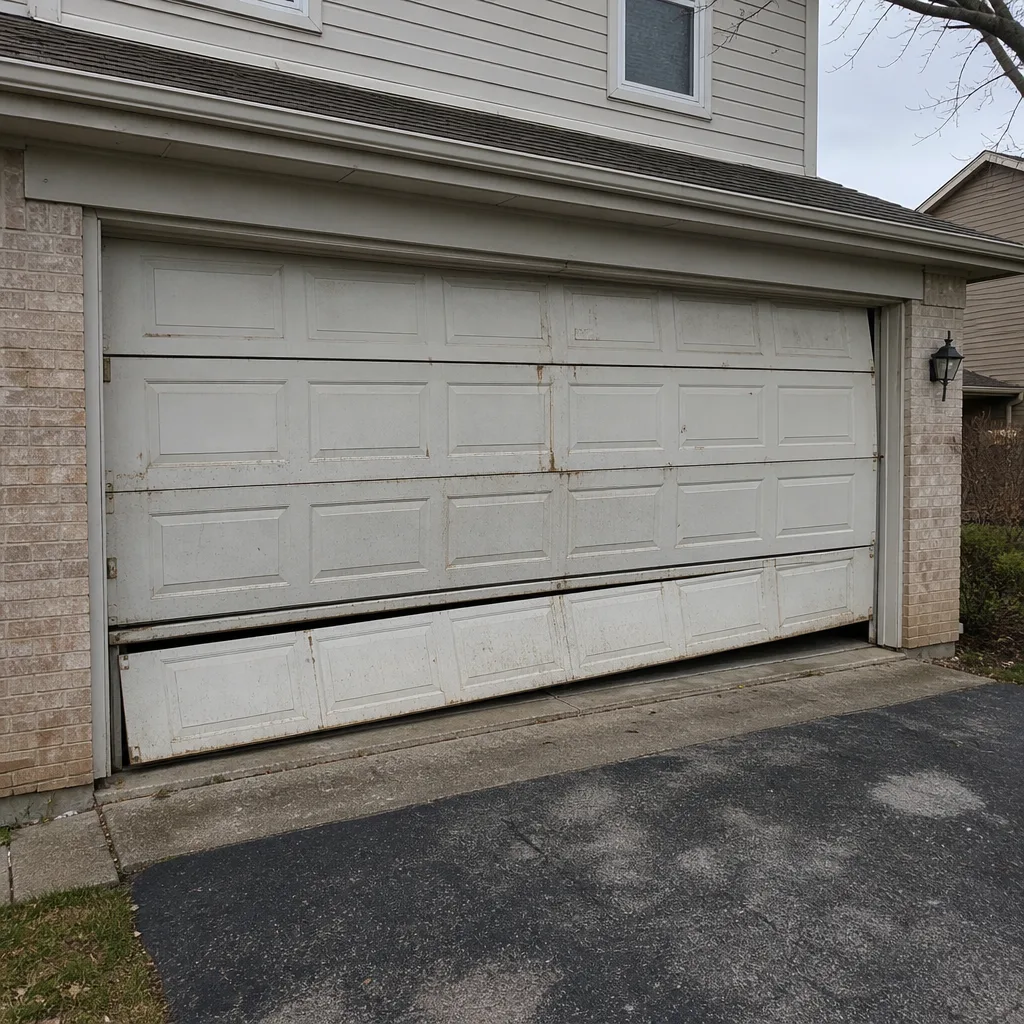 Before
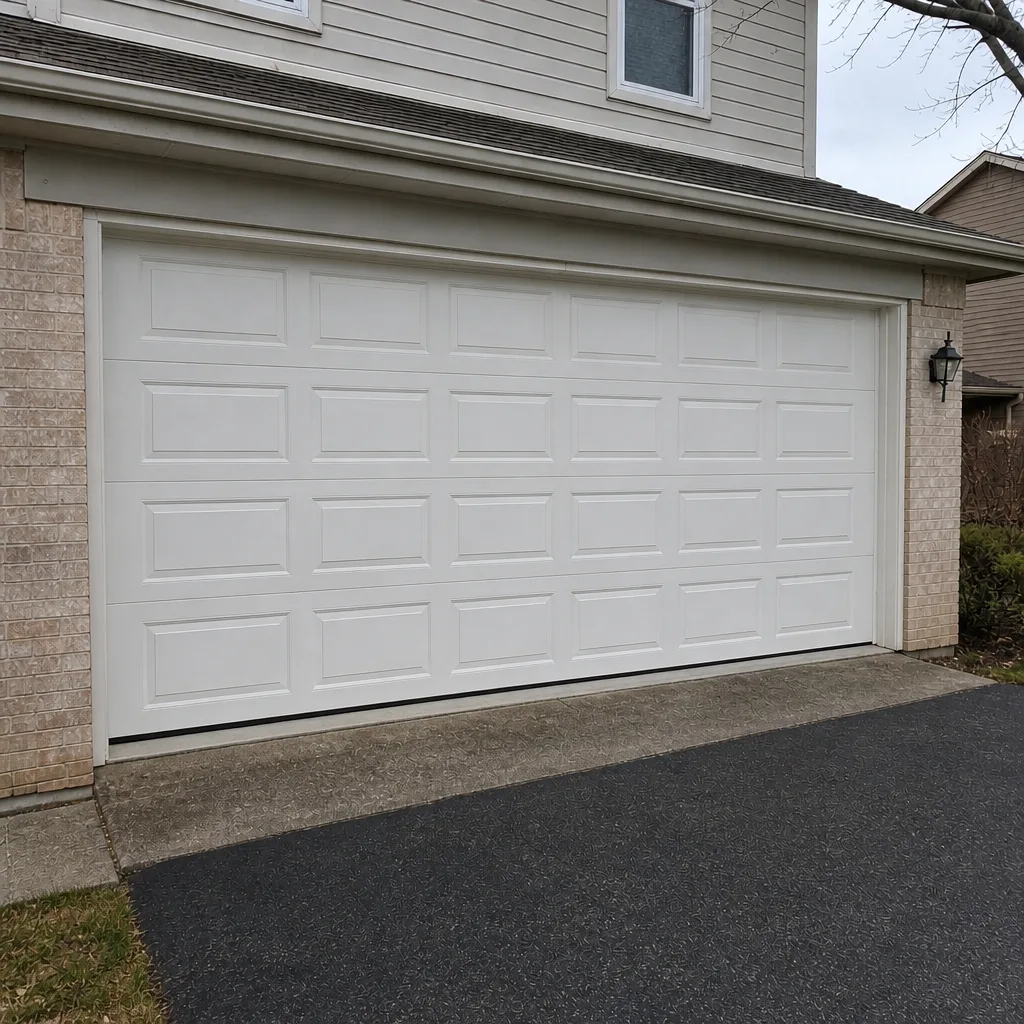 After
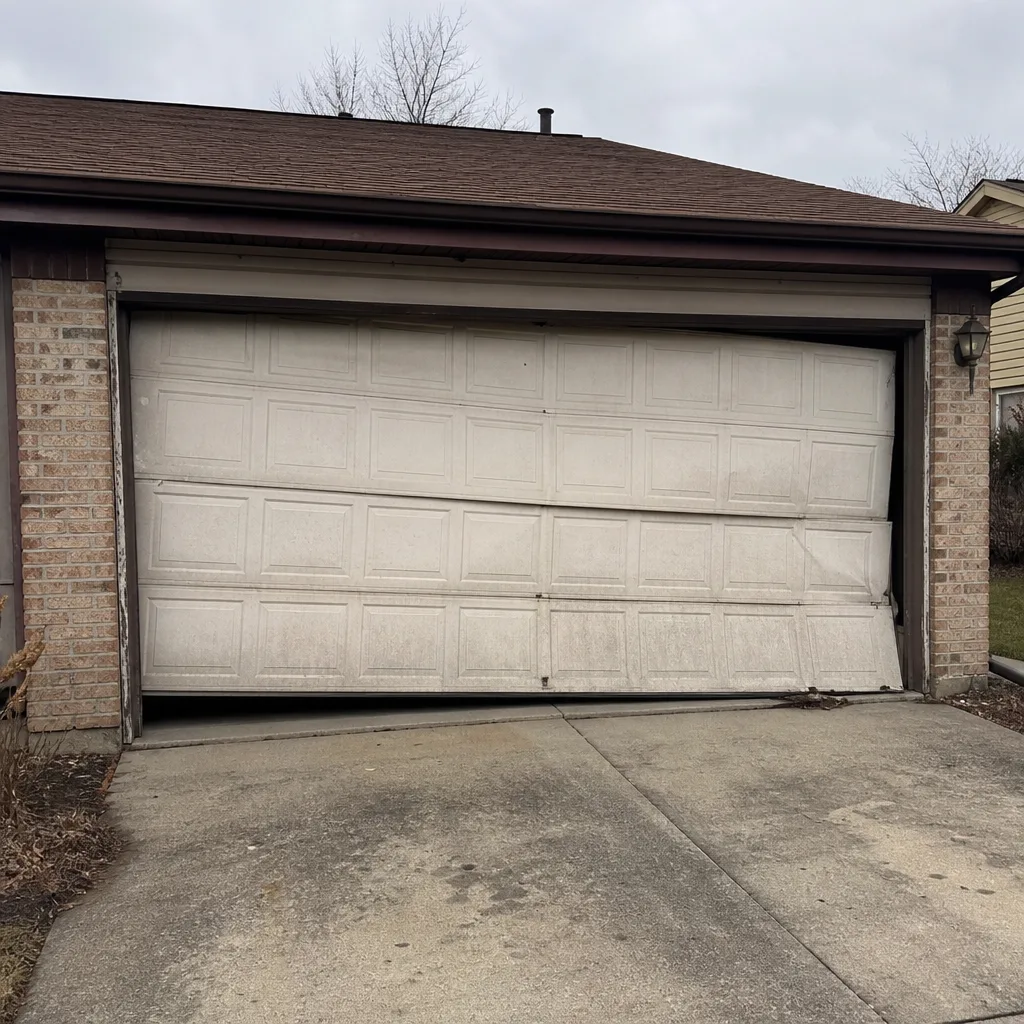 Before
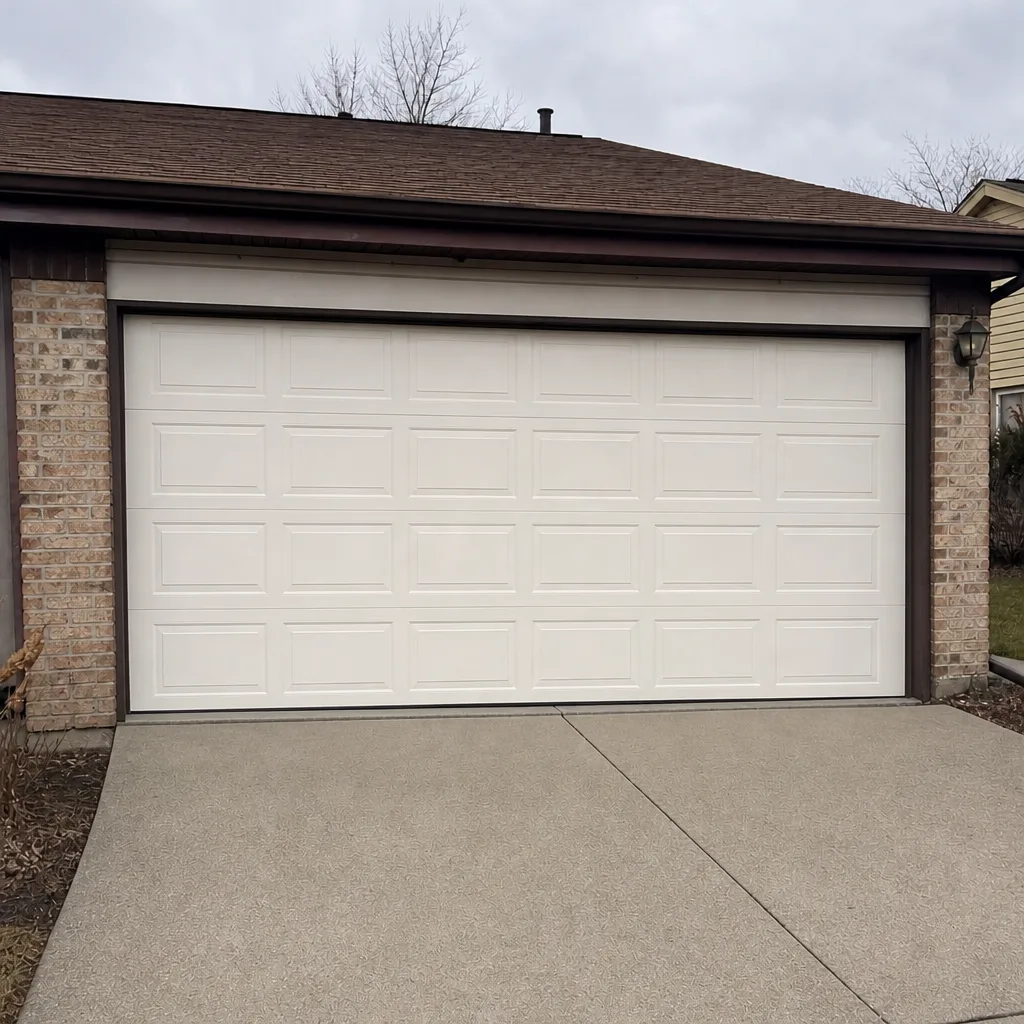 After
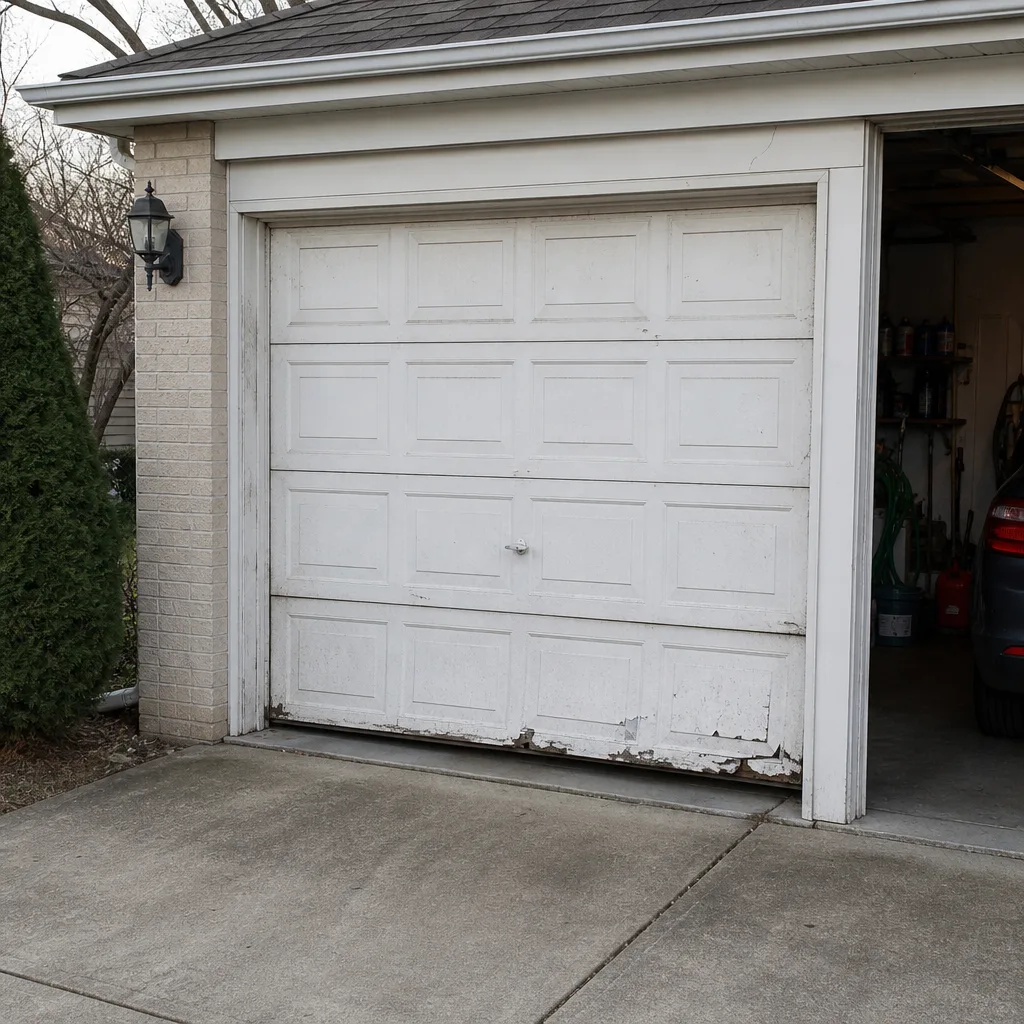 Before
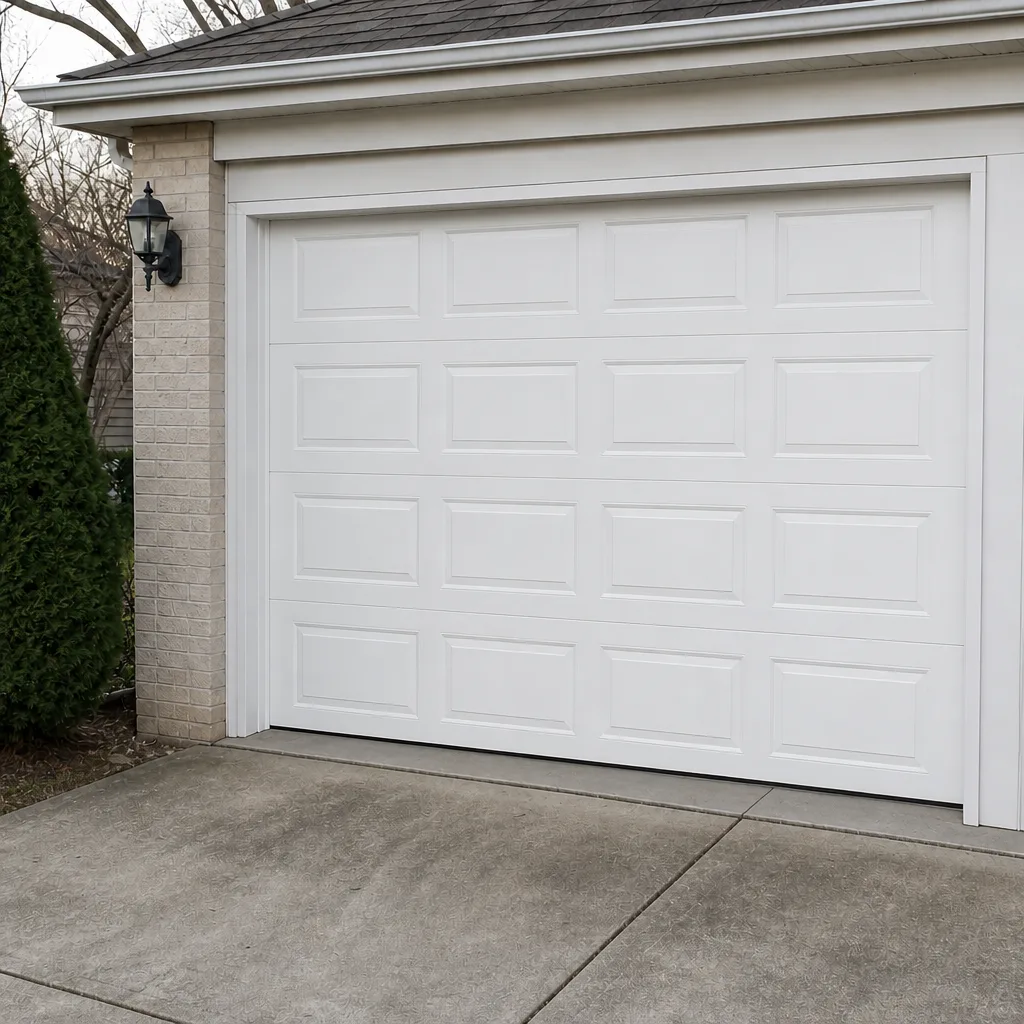 After
When to Call a Professional
Brand selection is a decision you can study on your own. But there are moments when a professional needs to see the door rather than a spec sheet: a broken torsion or extension spring, a door that has come off its track, an opener that doesn’t respond or runs but won’t lift, or a door that binds or slams during operation. Springs store a large amount of mechanical energy, and the tension in a torsion spring or the stretch in an extension spring is enough to cause serious injury if it’s handled by someone who hasn’t been trained to do it. That work requires the correct spring size, the right winding tools, and a technician who knows the door’s exact weight. If your door won’t lift or won’t stay down, or you’re comparing a new-door purchase and want it done correctly in Bolingbrook, Garage Door Repair Bolingbrook offers free estimates – call (833) 696-3327. We answer 24/7. Fast dispatch from 7am to 7pm, Sunday through Friday.
Frequently Asked Questions
There isn’t one brand that’s best for every Bolingbrook home, but there is a way to narrow it: prioritize the brand whose residential tier combines a sturdy steel gauge, good insulation with a thermal break, and a finish warranty written for a freeze-thaw climate, with replacement panels that ship to the area in days. Amarr, Clopay, Wayne Dalton, and Raynor all make doors that can meet those criteria in their mid and premium lines. The right pick depends on the door dimensions, the room behind the garage, and your curb-appeal goals. Call (833) 696-3327 for help comparing them on a free estimate.
If the garage is attached and shares a wall with living space, or sits under a bedroom, look for an insulated door with three-layer construction and a thermal break; a single-layer insulated door is the minimum for a detached garage. The specific number matters less than the construction and the thermal break, because those decide whether the cold stays outside. Bring your layout to an estimate and we’ll match a tier to it. Call (833) 696-3327 to set one up.
The brand matters much less than the spring size, which is matched to the door’s weight and height. Any competent technician can replace a spring on a Clopay, an Amarr, a Wayne Dalton, a Craftsman, or a Raynor door as long as they size the new spring correctly and use the right tools. A spring sized for a light door on a heavy one is the real problem, not the brand badge. Call (833) 696-3327 if your spring has broken – estimates are free.
It depends on the brand and its regional distribution, ranging from days to several weeks. Brands with strong distributor coverage in the Chicago area ship faster; brands sold primarily through national warehouse channels take longer. When you’re choosing a door, ask your installer how long a replacement panel would take for that specific door and where it ships from. Call (833) 696-3327 and we’ll help you find a brand that can get you a panel when you need one.
In most cases, yes. Our technicians have up to 11 years of experience and work on equipment from LiftMaster, Chamberlain, Genie, Clopay, Amarr, Wayne Dalton, Craftsman, and Raynor, so we can service the door and opener you already own rather than steering you to a new brand. For a garage door opener repair, a spring replacement, or a new-door comparison, call (833) 696-3327 for a free estimate.
No. We quote the price in writing and agree it with you before any work starts, and the written estimate sets the final price. If the job turns out to need more than we quoted, we discuss it before we proceed; we don’t surprise you with an invoice. For a garage door spring repair or a new-door install in Bolingbrook, call (833) 696-3327 and we’ll get you an exact quote.
The Bottom Line
Choosing a garage door brand in Bolingbrook comes down to matching steel gauge, insulation, and thermal break to the way a cold-climate door actually gets used, reading the warranty sections that matter in freeze-thaw conditions, and buying the right tier of a brand’s residential line rather than the badge. Door weight and section count drive the spring and opener you’ll need, and local parts availability is worth more than a name on a spec sheet. We work on the brands installed across Bolingbrook, and we’ll compare them with you on a free estimate. For any garage door repair or installation question, call (833) 696-3327. We answer 24/7. Fast dispatch from 7am to 7pm, Sunday through Friday.
Written by the team at Garage Door Repair Bolingbrook.